
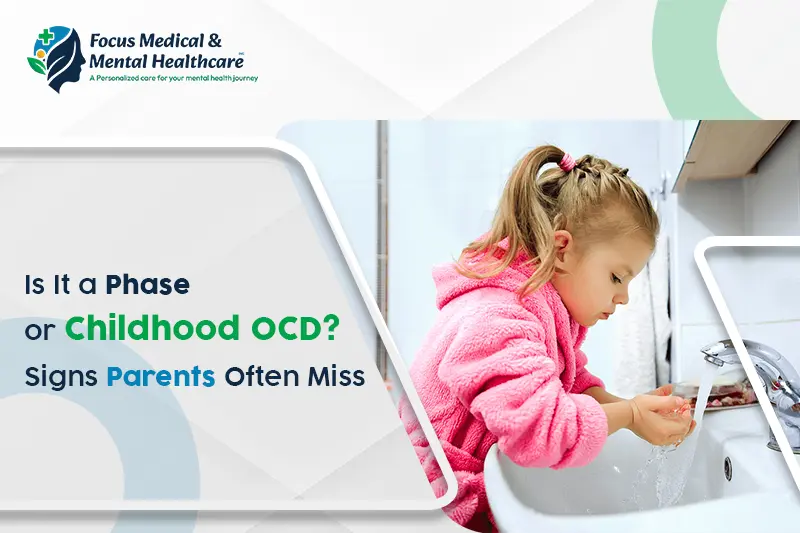
Kids do quirky things, strange little habits we often laugh at, snap pictures of, and we assume they’ll grow out of. Most of the time, they do. But sometimes, those tricky behaviors stick around, growing stronger instead of fading away. When that happens, they might be early signs of Childhood Obsessive-Compulsive Disorder. Knowing the difference between a normal growing phase and a true mental health struggle is one of the toughest challenges a parent can face. You don’t have to do this alone, we’re here to help. We can help you find the hidden signs and guide your child to feel safe again.
What is Childhood OCD and How Does It Differ from Normal Behavior?
Quick Answer: Childhood OCD is a mental health condition in which children have large, intimidating concerns (obsessions). They are compelled to repeat some actions (compulsions) in an attempt to prevent the negative thoughts. It’s not merely a refusal to cooperate, it’s a health problem.
OCD is a mental health disorder that has two major parts:
- Obsessions: These are huge concerns that become lodged in a child’s mind. They experience loud concerns and are very scared.
- Compulsions: These are the specific ways that a child will try to disrupt the negative thoughts.
Repeated actions for a parent may look like a child’s stubbornness. However, within the child’s psyche, they are experiencing a very frightening emotion. They’re in a war you don’t know about. Your child is not being rude on purpose.
Normal Growing Phases vs. Real OCD Signs: How Can Parents Tell?
It is normal for a little kid to want their bedtime stories read in the same order. A typical child might get a bit grumpy if you skip a page. They might whine or cry for a few minutes, but they will eventually fall asleep.
A child who is battling a mental health condition reacts in a very different way. If you change their bedtime routine, they might have a massive panic attack. They feel an intense terror that something horrible will happen just because a small rule was broken. They force you to start over because, to them, the fear is completely real and the panic runs incredibly deep.
What Are the Hidden Signs of Childhood OCD?
Sometimes the warning signs are very quiet and blend right into your busy family life. Watch out for these specific behaviors if you are worried:
- Asking for Reassurance: Your child might ask you the same question twenty times a day to make sure you are not mad.
- Erasing and Rewriting: When they sit down to do homework, they might erase a word until the paper actually tears.
- Avoiding Normal Places: They might suddenly refuse to go to a fun park because they are terrified of touching germs.
- Touching Things Evenly: If they accidentally bump their left knee on a table, they feel forced to bump their right knee.
How Does OCD Feel for a Child?
Children do not want to do these tiring rituals. They know that their repeated actions do not make logical sense. Kids will try their hardest to hide their behaviors, often waiting until they are completely alone in their bedroom to finish their rituals.
Imagine feeling like you have a loud fire alarm ringing inside your head all day long. It is exhausting. Holding all of that secret fear inside takes massive physical energy. Because of this, your child might come home feeling completely wiped out. They might melt down over tiny things, all because their brain is just too tired.
What Steps Should Parents Take for Childhood OCD?
Parenting a child with big worries is hard. Here are three key steps you can take:
- Start a Daily Behavior Journal: Write down what you see happening each day in a notebook.
- Speak with Gentle Kindness: Try your best to never punish your child for their compulsions.
- Ask for Expert Help: Mental health conditions need special care from trained providers. Experts often use proven tools like Cognitive Behavioral Therapy (CBT) or Exposure and Response Prevention (ERP). These methods help kids learn to face their fears safely.
Where Can You Find Expert Psychiatric Care?
If you notice these hidden signs, asking for a professional evaluation is the absolute best step. Focus Medical and Mental Healthcare Inc can step in and help your family.
Our clinic is led by Francis Okafor, a kind psychiatric nurse practitioner and military veteran. We help children from ages ten to seventeen, along with adults. We offer personalized care through easy telepsychiatry visits, meaning your child can talk to a kind expert while sitting on their own cozy couch. We help with careful mental health assessments and safe medication management. Our team listens carefully and cares deeply about your family’s well-being.
Helping Your Child Step Forward with Hope
Raising a child who is struggling with big worries can feel very lonely. Learning about these hidden signs is a beautiful first step toward healing. Your child’s fears are never a sign of bad parenting. You did not cause this.
With the right psychiatric care, kids can learn to handle their worries so they can regain their joy and get back to simply being kids. Reach out to us at Focus Medical and Mental Healthcare Inc today to start the journey toward a peaceful mind.
Quick Recap: Phase vs. OCD
| Behavior Focus | Normal Growing Phase | Possible Sign of OCD |
| Routines | Wants the same bedtime story | Has a panic attack if the routine changes |
| Fears | Does not like being sick or dirty | Refuses to go to fun places out of deep germ fear |
| Rules | Gets mad or whines if a rule is broken | Feels real terror that bad things will happen if a rule is broken |
FAQs
Q. What are some hidden signs of OCD in children?
Look for asking the same question over and over, erasing homework until the paper tears, missing out on fun activities due to germ fears, or needing to touch both sides of their body evenly.
Q. Why does my child melt down after coming home?
Children try very hard to hide their rituals at school. Fighting secret fears all day takes a lot of energy. By the time they get home, their brains are completely exhausted.